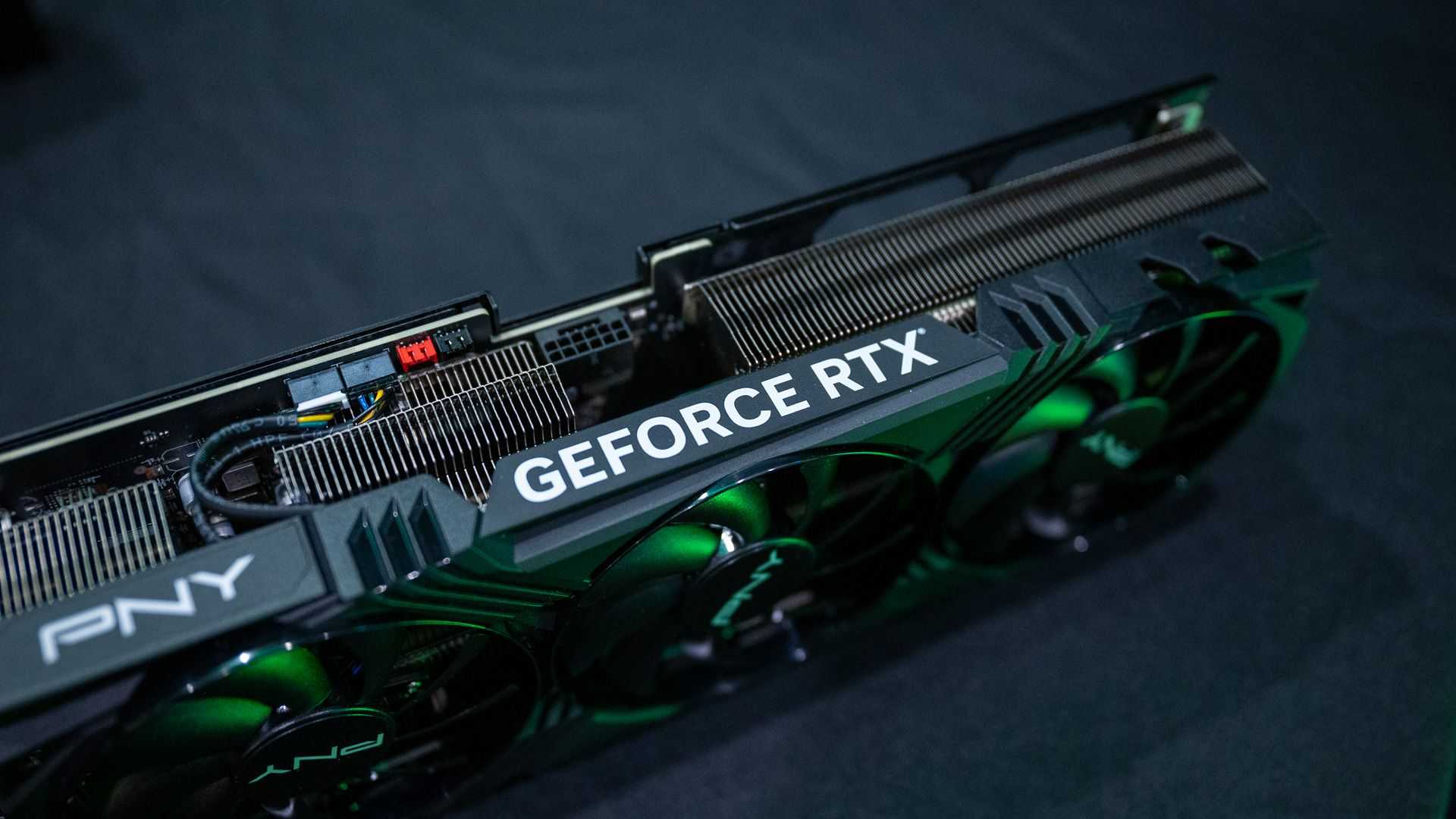
Если вы хотите оценить разницу между картами Nvidia GTX и RTX на практике, рекомендуется запустить игры с поддержкой трассировки лучей на обоих типах видеокарт и сравнить их на собственном опыте.
| Характеристика | Nvidia GTX | Nvidia RTX |
|---|---|---|
| Архитектура | Pascal и Turing | Turing и Ampere |
| Трассировка лучей | Отсутствует | Присутствует |
| Производительность | Низкая | Высокая |
| Энергоэффективность | Невысокая | Высокая |
| Искусственный интеллект | Отсутствует | Присутствует |
| Цена | Доступная | Дорогая |
Помните, что выбор между видеокартами Nvidia GTX и RTX зависит от ваших потребностей. Если вам важна высокая производительность и возможности трассировки лучей, и готовы уделить немного больше денег, то видеокарта Nvidia RTX станет для вас лучшим вариантом. В противном случае, видеокарта Nvidia GTX может быть более подходящим выбором для вас.
Сравнение видеокарт Nvidia GTX и RTX
Другое значительное различие между видеокартами GTX и RTX – это DLSS. По словам разработчика Nvidia, DLSS расшифровывается как Deep Learning Super Sampling (переводится как сглаживание на основе глубокого обучения) и представляет собой тип графической технологии, использующей искусственный интеллект для повышения производительности за счёт генерации большего количества кадров.
NVIDIA DLSS (Deep Learning Super Sampling) – это технология нейронной графики, которая увеличивает производительность с помощью искусственного интеллекта для создания совершенно новых кадров и отображения более высокого разрешения за счет реконструкции изображения, обеспечивая при этом лучшее в своем классе качество изображения и скорость отклика.
Конечно, наличие таких технологий, как трассировка лучей и DLSS, означает, что видеокарты Nvidia GTX и RTX будут различаться и в цене. И это понятно, учитывая прогресс в поколениях. Обратите внимание, что хотя обновление драйвера Nvidia 2020 года действительно реализовало трассировку лучей для некоторых графических процессоров Nvidia GTX, они недостаточно мощны, чтобы максимально использовать эту технологию, и результаты обычно ниже ожидаемых.
Характеристики видеокарт
| Характеристика | Серия GTX 10 | Серия RTX 20 |
|---|---|---|
| Архитектура | Улучшение ИИ | Улучшение с помощью ИИ |
| Только в GTX 1060 и выше | В некоторых моделях |
Что такое трассировка лучей?
Трассировка лучей Nvidia в реальном времени визуализирует графику с более реалистичным моделированием поведения света. Такой уровень реализма делает игры более реалистичными, а благодаря архитектуре Nvidia RTX трассировка лучей может быть реализована более эффективно без снижения производительности.
RT Cores ускоряет трассировку лучей, предлагая разработчикам рендеринг с трассировкой лучей. Таким образом, объекты и окружение могут отображать точное освещение, что опять же обеспечивает более реалистичное изображение. Сопоставьте это с тензорными ядрами Nvidia, и вы получите потрясающие реалистичные изображения, которые обеспечивают высококачественный прирост производительности благодаря улучшению изображения с помощью ИИ и DLSS.
Видеокарты Nvidia RTX продолжают впечатлять
Благодаря значительному повышению производительности видеокарты Nvidia серии 40, выпущенные в конце 2022 года, предлагают более высокую частоту кадров и скорость по сравнению с 30 серией. Поскольку Nvidia продолжает инвестировать в повышение производительности видео с помощью ИИ, можно предположить, что карты RTX будут по-прежнему привлекать пользователей.
Если вы всё ещё склоняетесь к выбору видеокарты Nvidia GTX, подумайте об обновлении до карты RTX, которая позволит наслаждаться трассировкой лучей и DLSS, а также другими функциями, повышающими производительность.
Хотя видеокарты RTX могут иметь более высокую цену по сравнению с видеокартами GTX, их улучшенная производительность и возможности могут оправдать инвестиции для данных ученых, работающих над требовательными задачами.
<strong>В заключение, выбор между видеокартами GTX и RTX для науки о данных в конечном итоге зависит от ваших конкретных потребностей, бюджета и соображений будущего развития. В то время как видеокарты RTX предлагают превосходную производительность и совместимость для задач машинного обучения и глубокого обучения, видеокарты GTX могут быть достаточными для предварительной обработки и анализа данных. Прежде чем принимать решение, на какую видеокарту инвестировать для работы в области науки о данных, рассмотрите ваши кейсы использования, ограничения бюджета и желание быть готовым к будущему. И помните, непрерывная поддержка и обновления драйверов для видеокарт RTX могут приносить дополнительную ценность в долгосрочной перспективе.</strong>
In the GTX vs RTX debate for data science, the choice ultimately depends on your specific needs and budget. While GTX GPUs can provide decent performance for certain data science tasks, RTX GPUs are better equipped to handle the demands of modern AI and deep learning workloads. Their enhanced compute capabilities, larger VRAM options, and improved compatibility make them the preferred choice for many data scientists. However, if budget constraints are a significant concern, a GTX GPU can still be a viable option, offering a reasonable balance of price and performance.
In the rapidly evolving field of data science, it’s essential to stay informed about the latest GPU developments and consider how they align with your research and computational requirements. Whichever GPU you choose, it’s crucial to harness the power of these accelerators to unlock the full potential of your data science projects.
Frequently Asked Questions
Q1. Is RTX better than GTX for machine learning?
A.Yes, RTX GPUs are generally better than GTX for machine learning due to their enhanced compute capabilities, Tensor cores, and larger VRAM, which accelerate training of deep learning models.
Q2. Is RTX good for data science?
A. Yes, RTX GPUs are excellent for data science, especially tasks involving AI, deep learning, and large datasets, thanks to their superior compute performance and ample VRAM.
Q3. Is GTX better than RTX?
A. Generally, RTX is better than GTX, especially for compute-intensive tasks like machine learning and data science. RTX GPUs offer improved performance and compatibility.
Q3. Is RTX 3050 enough for data science?
A. The RTX 3050 can handle many data science tasks but may be limited by its lower VRAM compared to higher-end RTX models. It’s suitable for entry-level data science work.
To ray trace or not to ray trace?

Quick Links
GTX is a mostly-retired line of graphics cards by NVIDIA. It was formerly its flagship line, but it has been relegated to entry-level cards. RTX, on the other hand, is NVIDIA’s current lineup of cards. RTX has ray tracing, while GTX doesn’t.
NVIDIA has been making graphics cards for several years. However, there are two lineups of GPUs you’ve probably come across with: GTX and RTX. What are the differences between both?
What Does GTX Mean?
The very first graphics cards carrying the GTX branding were launched by NVIDIA in 2005, and they became increasingly common as the years went by. NVIDIA fully embraced the GTX branding by 2008, when it launched the GTX 200 series. GTX stands for "Giga Texel Shader eXtreme."
The term "texel" (or "texture pixel") refers to the fundamental unit of texture maps, with textures in games being comprised of arrays of texels. Having said that, this doesn’t really refer to any technical capabilities, so over the years, it just came to mean "high-end graphics card."
NVIDIA used the GTX branding alongside GT, which was its branding for its lower-end graphics cards, for several years. The GTX lineup has had a legendary run spanning more than a decade by this point. NVIDIA has largely stopped using the GTX branding for its high-end cards since 2018, although it still releases GTX cards sparingly, such as the NVIDIA GTX 1630, released in 2022.
What Does RTX Mean?
RTX is NVIDIA’s current branding for its high-end and mid-range gaming graphics cards, which has been in use since 2018. The RTX name means "Ray Tracing Texel eXtreme," and the main difference from GTX cards is the inclusion of ray tracing.
Ray tracing is a technique that traces the path of light rays as they bounce around a virtual scene, interacting with objects and bouncing off or passing through them. Basically, it imitates the way light behaves in real life in order to create more realistic and accurate images.
Ray tracing has greatly improved the way games look, and having real-time ray tracing in games was a major breakthrough — enough of a breakthrough to warrant NVIDIA changing its GPU branding. RTX graphics cards have dedicated RT cores or hardware accelerators dedicated solely to computing ray tracing operations efficiently.
RTX cards have these RT cores, while GTX cards don’t.
Which One Should I Buy?

Justin Duino / How-To Geek
GTX is mostly a retired brand by this point. NVIDIA has managed to roll out its RTX tech to high-end, mid-range, and budget GPUs — just look at cards such as the RTX 3050 to see it. As such, if you’re planning to game, and you want to buy a new GPU, there’s no reason why you should look at GTX cards at all.
If you’re buying a GPU and you don’t exactly have gaming in mind, though, an argument could still be made for a GTX GPU. For one, you could buy a GTX 1630, or a GT 1030, to provide you with cheap, basic graphics for a living room or office PC. If you want to do some minor gaming, you could also check out the GTX 1650 and the GTX 1660, as they’re still decent, ray tracing-less GPUs for playing basic, not-graphics-heavy games. You can also get used ones, but we wouldn’t recommend it.
Everyone else, though, should probably aim for an RTX GPU. It’s basically NVIDIA’s current GPU brand at this point, and you don’t really have any modern non-RTX cards to consider.
Discover the differences between Nvidia’s GTX and RTX graphics cards, with performance-boosting features like ray tracing and DLSS.
Nvidia offers two main lines of graphics cards: Giga Texel Shader eXtreme (GTX) and Ray Tracing Texel eXtreme (RTX). These variants sit under the GeForce brand, which is owned by Nvidia.
Released 10 years apart from each other, GTX and RTX cards offer different features and architecture. But, to help you decide whether you want to invest in an Nvidia GTX or Nvidia RTX graphics card, it’s important to understand the key differences.
Nvidia GTX vs. Nvidia RTX Differences
The first GPU in the Nvidia GTX series was the GTX 260, released in 2008. A decade later, Nvidia’s RTX cards were announced in 2018, bringing real-time ray tracing to offer a new and immersive gaming experience.
The differences between Nvidia GTX and Nvidia RTX boil down to six key areas:
But reading about the differences is one thing. It’s best to take a look at the differences between RTX and GTX to see the reality.
Ray tracing is a somewhat complicated process of calculating how light rays reflect off surfaces and how shadows are formed. The end result essentially produces shadows with softer and smoother edges to create more immersion. Images become more realistic, but ray tracing does cost more processing power.
The other main difference between GTX and RTX graphics cards is DLSS. DLSS stands for Deep Learning Super Sampling and is a type of graphics technology that uses AI to boost performance by generating more frames, according to Nvidia Developer:
NVIDIA DLSS (Deep Learning Super Sampling) is a neural graphics technology that multiplies performance using AI to create entirely new frames and display higher resolution through image reconstruction—all while delivering best-in-class image quality and responsiveness.
Of course, having technologies like ray tracing and DLSS means the other difference between Nvidia GTX and RTX graphics cards is their price. And that’s understandable, given the advancement in generations. Note that while a 2020 Nvidia driver update did implement ray tracing for some Nvidia GTX GPUs, they’re not powerful enough to make the most of the tech, and results are typically below what you’d expect.
GTX 10 SeriesRTX 20 Series
Only on GTX 1060 or higher.
EVGA GeForce RTX 2060
The EVGA GeForce RTX 2060 offers 6GB of RAM and comes with a pre-installed all-metal backplate.
With dual fans, you can expect higher performance, more efficient cooling, and quieter operation.
What Is Ray Tracing?
Nvidia’s real-time ray tracing renders graphics with a more lifelike simulation of how light behaves. This level of realism makes games feel more immersive, and thanks to Nvidia’s RTX architecture, ray tracing can be implemented more efficiently without putting a drain on performance.
RT Cores accelerate ray tracing by offering developers ray-traced rendering. Therefore, objects and environments can portray accurate lighting, again offering a more captivating experience. Pit this alongside Nvidia’s Tensor Cores, and you’re left with stunning, realistic images that deliver a high-quality performance boost with AI upscaling and DLSS.
Nvidia’s RTX Graphics Cards Continue to Impress
Although you can still pick up an Nvidia GTX graphics card, it’s well worth the investment to upgrade to an RTX card so you can enjoy ray tracing and DLSS, among other performance-increasing features.
RTX and GTX are two series of graphics cards by NVIDIA. RTX cards are newer and more powerful than GTX cards, and they have ray tracing and DLSS features that GTX cards don’t have. Ray tracing is a technology that simulates realistic lighting effects, and DLSS is a technology that boosts performance and image quality using AI.
Nvidia RTX enables real-time ray tracing. Historically, ray tracing had been reserved for non-real-time applications (like CGI in visual effects for movies and in photorealistic renderings), with video games having to rely on direct lighting and precalculated indirect contribution for their rendering. RTX facilitates a new development in computer graphics for generating interactive images that react to lighting, shadows, and reflections. RTX runs on Nvidia Volta-, Turing-, Ampere- and Ada Lovelace-based GPUs, specifically utilizing the Tensor cores (and new RT cores on Turing and successors) on the architectures for ray-tracing acceleration.
Дополнительно о техподдержке
 Идеальное приложение для записи звонков для Android в 2021 году — все, что вам нужно!
 Найдите журналы Windows 10 за считанные минуты с помощью этого удобного руководства
 14 ое поколение процессоров intel почти не будет отличаться от 13 го
 Раскрытие инструкций по открытию файлов MDF и MDS в Windows 10
 Глория Джинс – бесплатный телефон горячей линии
 СМП Банк – продукты и услуги банка, рейтинг банка, адрес головного офиса и официального сайта, интернет банк, бесплатные номера телефонов горячей линии СМП Банка
 Устранение неполадок: Интернет не загружается – распространенные исправления
 <strong>10 дома один язык</strong>